


Blog Details

"Decoding Inclusions: Unveiling Identification Insights in Lab-Grown Diamonds"
share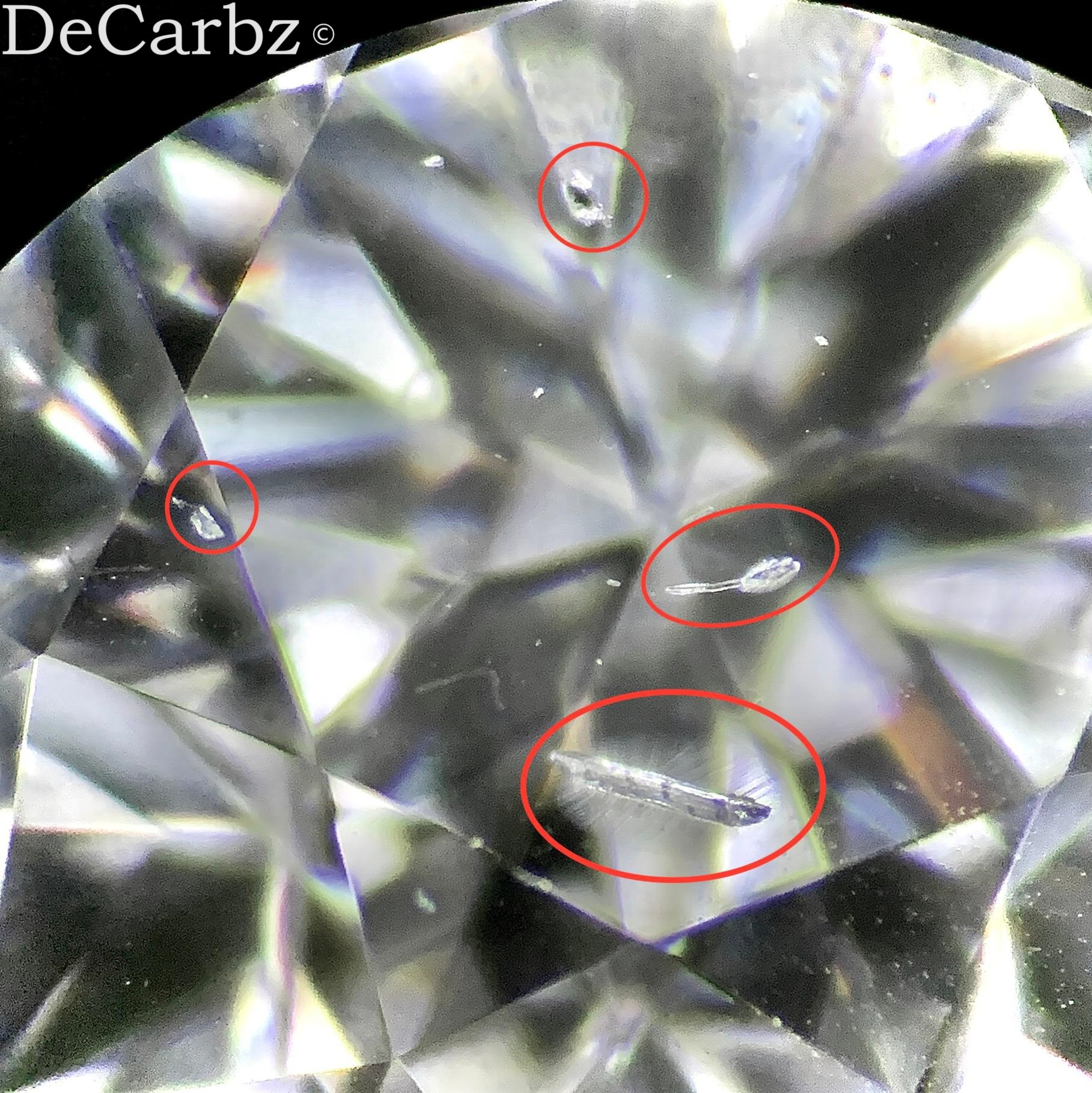

March 11, 2024
In the realm of lab-grown diamonds, the High-Pressure High-Temperature (HPHT) method stands as one of the prominent techniques for diamond synthesis. While this process yields stunning gemstones with remarkable clarity and brilliance, it also gives rise to distinct inclusions that offer valuable insights into the diamond's formation journey.
Metallic Features:
Among the most recognizable inclusions in HPHT-grown diamonds are metallic features, characterized by their dark, metallic appearance. These inclusions are remnants of the metallic catalyst used in the growth process. When the catalyst fails to dissolve completely, residual metallic particles become trapped within the diamond crystal. As the diamond cools and solidifies, these particles form distinctive metallic inclusions, serving as enduring markers of the growth process.
Metallic Needles:
Another prevalent inclusion observed in HPHT-grown diamonds is metallic needles. These inclusions vary in size, ranging from large to very fine, and commonly align themselves along the crystal faces and edges, following the growth pattern of the diamond. Their presence reflects the intricate dynamics of the growth environment, where metallic particles organize themselves along the emerging crystal lattice, leaving behind intricate needle-like formations.
As we continue to explore the fascinating world of diamond inclusions, we invite you to join us on a journey of discovery and appreciation. Stay tuned for more insights and revelations as we delve deeper into the hidden wonders of lab-grown diamonds.
Happy exploring!